Coffee and New Wave Taiwan and Hong Kong Directors: Lu Xiao Wei’s Essential List
Written in LBB
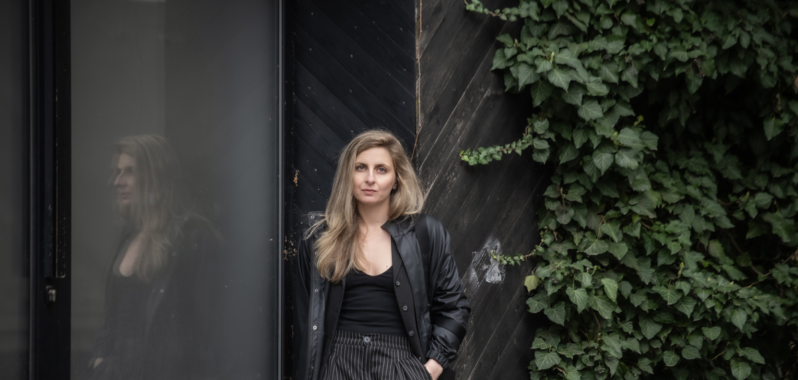
Neda Morfova speaks naturally and freely, her movements seem to describe the spoken words, and when she tells a story, it seems as if she is reliving it in the moment. We say this with certainty, because we met with Neda - one of the most famous commercial directors in Bulgaria.
She told us about her debut in cinema with the series "The Waves", we talked about advertising, which still hesitates between stereotypes and reality, and about working on her first feature film set between Sofia and Berlin.
Maria Krastanova: Does the surname Morfov matter - you are the daughter of director Alexander Morfov and actress Reni Vrangova? And why are you minka_jones on Instagram?
Neda Morfova: Minka and Jones are an interesting and random combination of names. My friend's mother was called Minka and it stuck with me as a funny name. I made my account when I was 17 and it stayed that way. When we created the Instagram accounts, we didn't know that this would have any weight – that they would first check you there and draw conclusions about you based on your profile.
As for the last name, it doesn't bother me, I accept it as something common and normal. Of course, there is always a slight smile or a pucker of the lips when you meet someone.
So far, you have mainly worked in advertising, right?
Yes, that's right. My last short film was 15 years ago. Then we won an award at the Sofia Film Fest. We were going to make a new film with the money from the award, but in the end we spent it on surfing in Turkey. Then we got really angry. It took me 15 years to return to cinema again.
How did you decide to switch from advertising to cinema 15 years later?
I always knew that cinema was my place. Working on the series “The Waves” seemed much more daunting to me than working on my debut film, which I had prepared as a script even before I was called about the series. I always thought that my debut would be my own film with a personal script. But when Koyna Ruseva called me and told me with absolute enthusiasm and madness about this project, without realizing it, I accepted. I jumped straight into the deep end – with a small budget, a much longer form, like three feature films. But now I am very happy that it happened that way, because I am much more prepared.
You said that you have a ready script for a feature film, can you tell us a little more about it?
Yes, it is already supported by the National Film Center, MEDIA Creative Europe and BNT. We are waiting for additional funding from abroad, since the plot is mostly set in Berlin. It’s about a former punk star, his daughter and her son, who meet for the first time while walking the streets of Berlin. The plot deals with three strangers who stay together not because of their biological relationship, but because they start to like each other and enjoy being together. We chose Berlin because it is a symbol of punk, even though that time is long gone.
About “The Waves”. The series that brings together Maria Kavardzhikova, Teodora Duhovnikova, Radina Kardzhilova, Koyna Ruseva, Yulian Vergov and a number of other popular actors. Were you involved in the entire process of creating the project?
That’s right. Koyna Ruseva and Teodora Duhovnikova had already met with Radina Kardzhilova and contacted Rene Karabash, who had started working on the initial idea. When I got involved, she was already working on a very poetic, romantic script. He was wonderful, but I, for my part, called Petar Krumov, who is the other director of the series. With him, we managed to rewrite the script so that we could film it – that poetry and romance would be on screen, not just as text.
What is it like to work in such a female team?
I think we went too far with presenting the series as “female”. The cover is female, but inside the content there is a very serious male part, which is no less important. Petar Krumov and I balanced each other very well. I am much more interested in emotion and vision. Petar, for his part, who, in addition to being a director, also has a wonderful novel, is mainly driven by dramaturgy. The perfect combination. I think the two of us worked like a well-oiled machine. The filming was very difficult – due to the actors’ busy schedules, business trips, and difficult scenes in terms of staging – we were filming one after the other. I filmed one scene until noon, and in the afternoon – he filmed a scene from a completely different episode. This was the only way we were able to film everything we wanted, even though it drove the crew and actors to schizophrenia.
What kind of person are you on set?
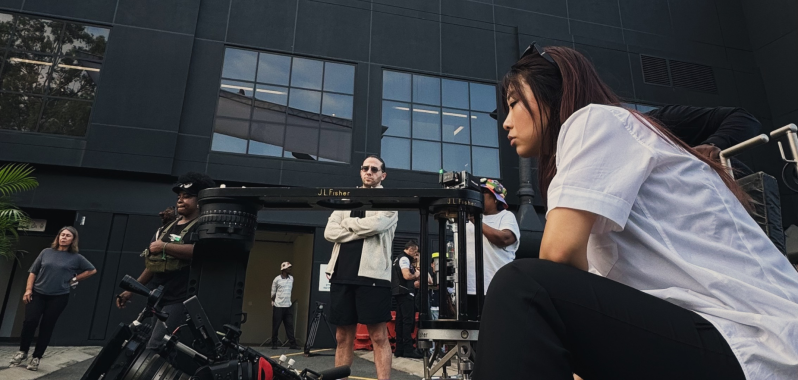
On location I look extremely ridiculous, I walk around neurotically, I express myself chaotically and laconicly, I don't like to explain the motivation or meaning of each line, because then the scene starts to seem too thought out, too learned. Sometimes I deliberately take the actors out of their comfort zone to provoke something unexpected in their acting, which surprises them too.
Once I moved all their props before a take without telling them. And that's when it worked out great, because instead of thinking about their lines, they start
Written in LBB
For LBB
Written in Sports Business Journal
Written in Adweek By Robert Klara
Written in AdAge
Written in RoastBrief